Plant / 130 to 160 t all-terrain mobile crane
150 t All-Terrain Crane
The heavy-lift workhorse for Australian infrastructure, bridge girder erection, industrial plant installation, and major civil engineering projects.
- Telescopic boomUse the approved configuration and operating radius for lift planning.
- OutriggersSetup and ground support affect positioning time.
- CounterweightMobilisation depends on the specified crane configuration.
- Max capacity
- 160,000kg
- Main boom length
- 60.0m
AUD ex GST. *Unquoted placeholder. In accordance with Vaultix estimating principles, hire rates are never invented or extrapolated. Obtain current supplier quotations.
Choosing this class of all-terrain crane
A 150 t class (130 to 160 t) 5-axle all-terrain mobile crane (such as the Tadano Faun ATF 160G-5) is the primary heavy-lift crane across Australian infrastructure, bridge erection, wind farm assist, mining maintenance, and precast civil construction. Combining highway cruising up to 85 km/h at 12 t per axle with a dual-engine architecture (Mercedes-Benz OM 502 LA 385 kW carrier engine and Mercedes-Benz OM 906 LA 137 kW superstructure crane engine), it achieves high mobility and low operational fuel burn. Equipped with a 60.0 m 6-section full-power boom, 160 t maximum rated capacity at 3.0 m radius (140.7 t full 360° slew), an 8.98 m x 8.30 m outrigger footprint, and 51 t self-rigged counterweight, it delivers versatile heavy lifting across intermediate and long radii. Productivity is modeled by pick cycles per hour and tonnes placed per hour, strictly governed by operating radius, boom extension, and counterweight ballast.
The heavy-lift workhorse for Australian infrastructure, bridge girder erection, industrial plant installation, and major civil engineering projects.
150 t class (160 t max) / 60.0 m main boom / All-terrain crane / SafeWork C0 / DG
- Bridge girder erection (precast concrete Super-T girders, steel box girders, and headstock placement)
- Heavy precast concrete panel, column, and portal frame structural erection for civil and industrial facilities
- Major industrial plant installation (chillers, transformers, modular process skids, boilers, and pump sets)
- Heavy civil equipment yard logistics, assembly, and transport float loading (excavators, drill rigs, crushers)
- Civil temporary works support (trench shoring shields, sheet piling, heavy excavator crane mats, dewatering sets)
- Foundation piling cage pitch-up and placement into bored piles and diaphragm wall guide walls
- Wind turbine component handling, mechanical substation transformer placement, and rail corridor bridge renewals
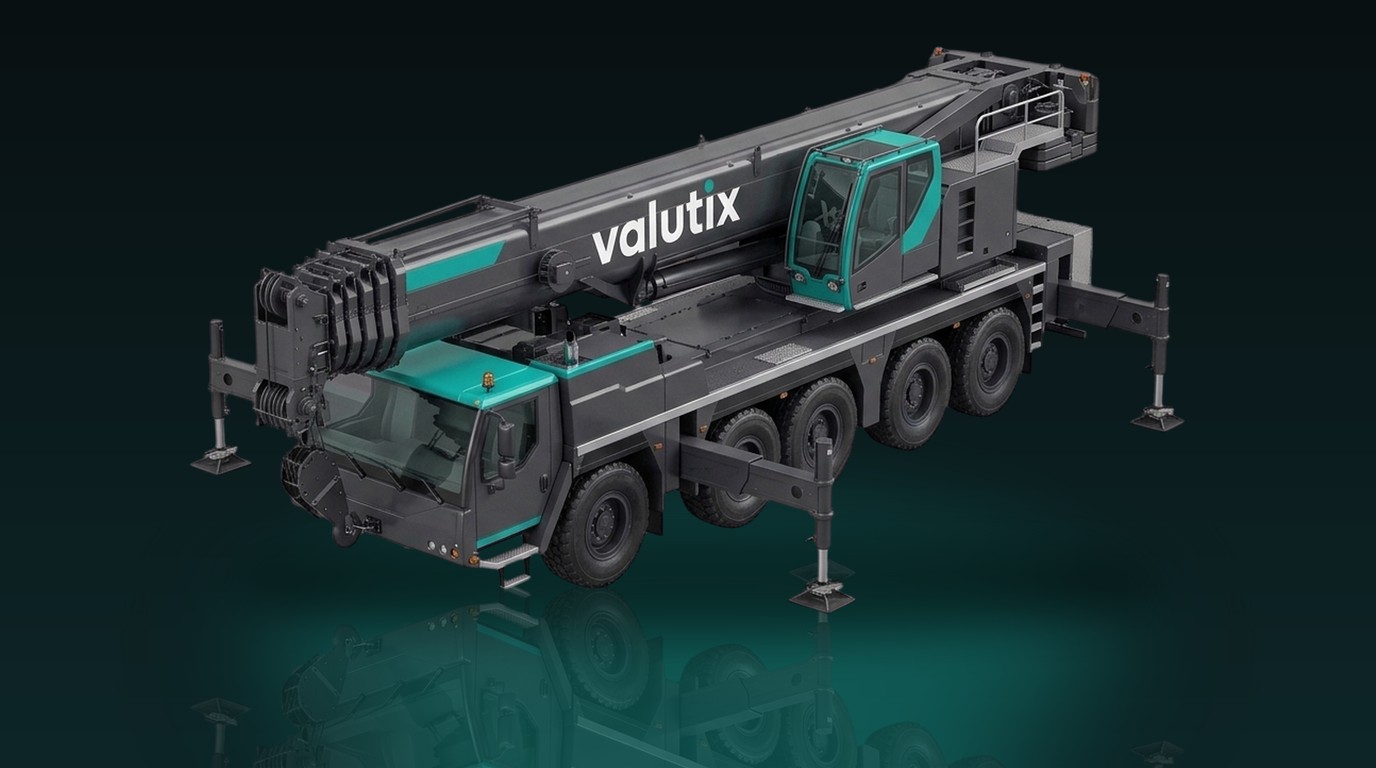
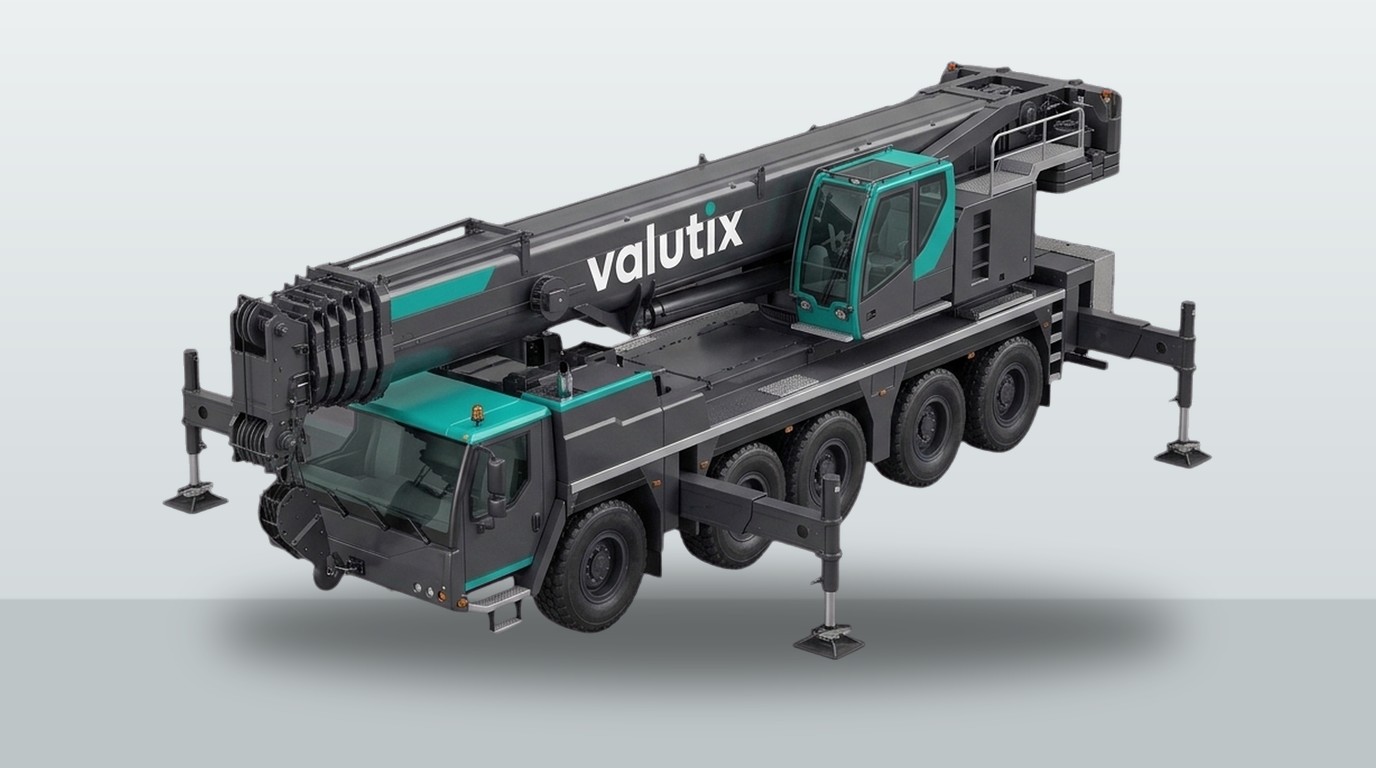
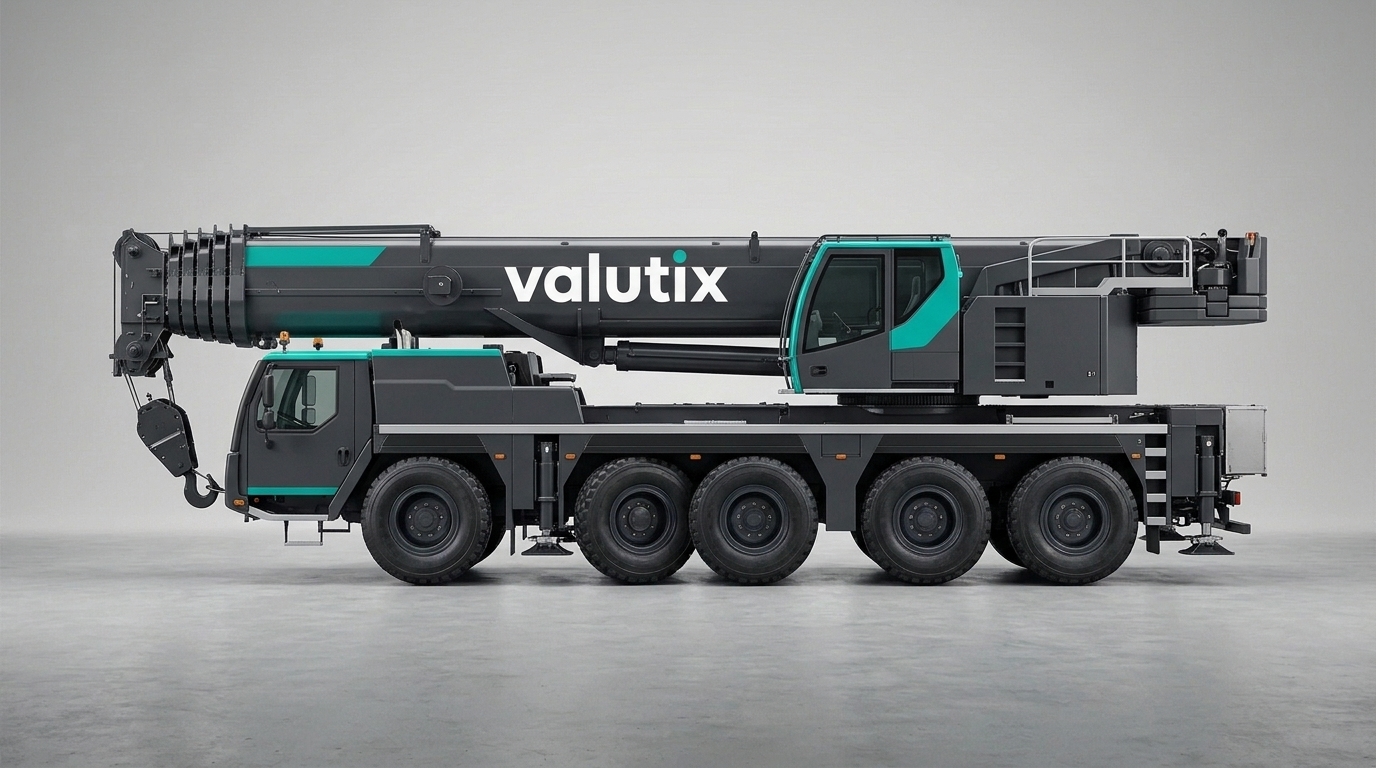
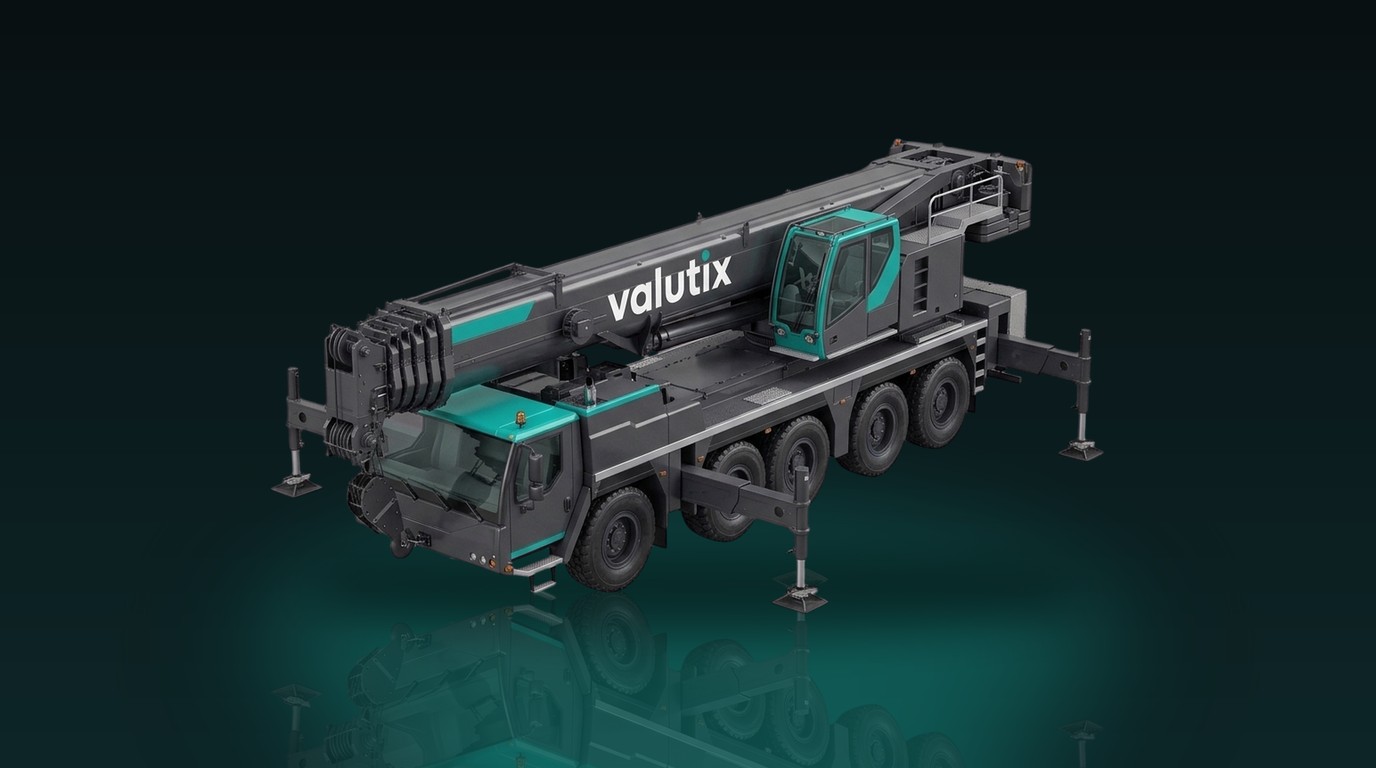
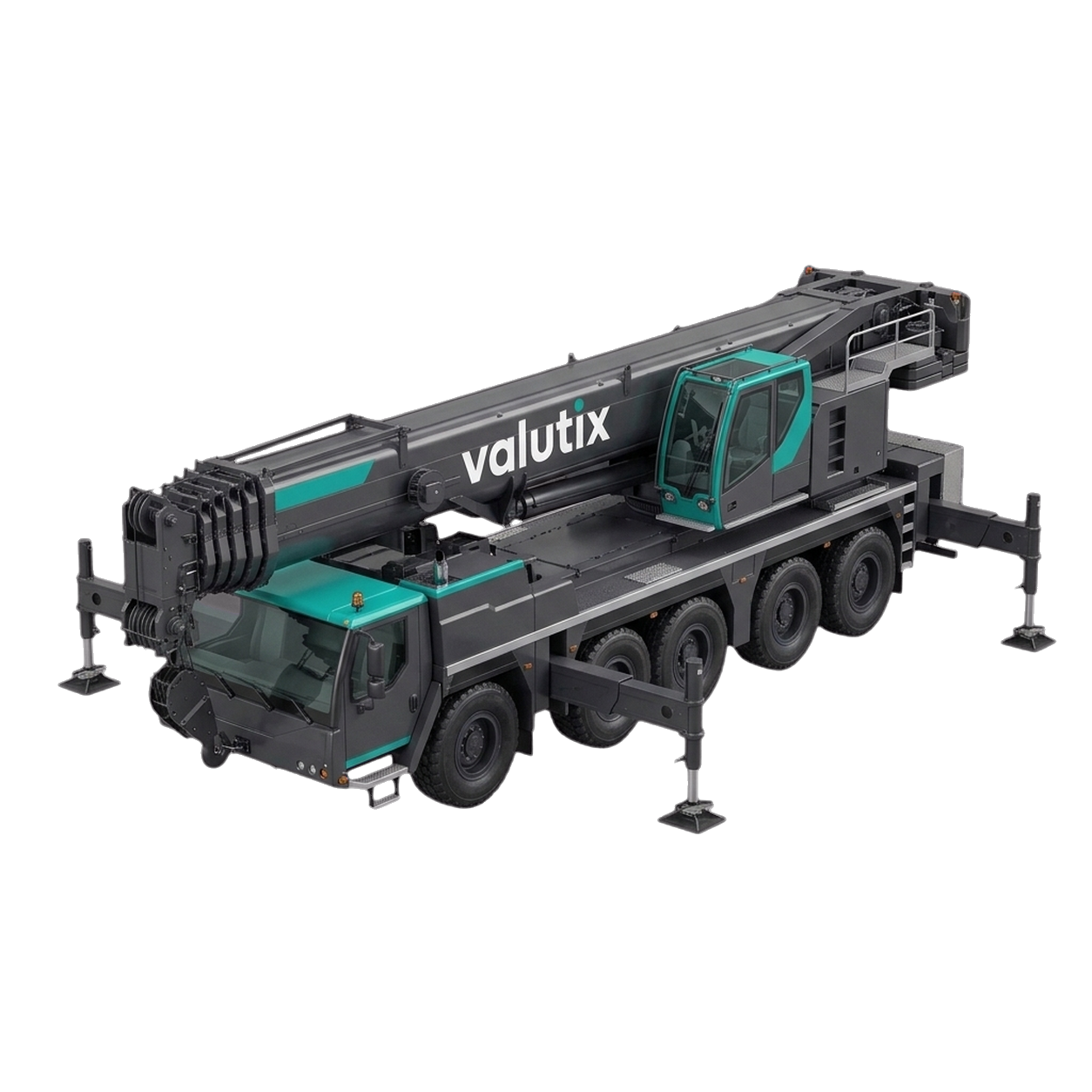
Illustrations featuring the Vaultix civil livery. Machine geometry, outriggers, and boom configurations represent typical Australian civil specifications.
Class planning guide
Published manufacturer specifications for the Tadano Faun ATF 160G-5 / 150 t class all-terrain mobile crane. Use supplier specifications for exact procurement.
| Ref | Item | Value | Planning note |
|---|---|---|---|
| 01.01 | Max lifting capacity | 160 t @ 3.0 m rear / 140.7 t 360° | 160 t on 13.2 m base boom over rear with heavy equipment; 140.7 t full 360° slew with 51 t ballast. |
| 01.02 | Maximum hook height | 60.0 m (up to 95.0 m with jib) | Main boom reaches 60.0 m hook height; 37.2 m lattice boom extension extends hook height to 95.0 m. |
| 01.03 | Main boom length | 13.2 m to 60.0 m | 6-section full-power telescopic boom extending under partial load across 5 powered stages. |
| 01.04 | Engines (dual-engine) | Carrier 385 kW / Crane 137 kW | Mercedes-Benz OM 502 LA 385 kW V8 travel engine; dedicated Mercedes-Benz OM 906 LA 137 kW superstructure crane engine. |
| 01.05 | Gross road travel mass | 60,000 kg (12 t per axle) | 5 axles at 12,000 kg per axle highway transit configuration carrying 1 t base ballast and jib extension; 85 km/h top speed. |
| 01.06 | Counterweight / ballast | 51 t (divisible, self-rigged) | 51 t maximum ballast; 1 t on crane in transit, 50 t on 2 support semi-trailers; self-rigged hydraulically without assist crane. |
| 01.07 | Fuel burn allowance | 10 to 25 L/hr (16.0 L/hr civil) | Superstructure crane engine burns 16.0 L/hr in standard civil duty; carrier road transit burns 65 to 85 L/100 km. |
| Ref | Item | Value | Planning note |
|---|---|---|---|
| 02.01 | Heavy infrastructure | Bridge girders & heavy precast | Massive lifting capacity (e.g. 56.2 t at 10 m, 23.6 t at 15 m) handles Super-T girders, large culverts, and bridge decks. |
| 02.02 | Compact road travel | 15.25 m length & 3.00 m width | Compact 5-axle chassis with all-wheel steering navigates congested urban infrastructure corridors and regional bridges. |
| 02.03 | Dual-engine efficiency | Low idle fuel burn & wear | Independent 137 kW crane engine drastically cuts fuel consumption and emissions during long crane standby shifts. |
| 02.04 | Self-rigging ballast | Onboard hydraulic cylinders | Assembles its 51 t ballast stack without an auxiliary assist crane, reducing mobilization equipment costs and site congestion. |
| 02.05 | All-terrain mobility | 10x8x8 Drive & hydropneumatics | Independent hydropneumatic suspension with height adjustment (+158/-118 mm) and transverse diff locks tackles unsealed site access. |
Dimensions and transport planning
Machine dimensions exclude auxiliary counterweight transport trailers. Obtain verified route clearance, bridge permits, NHVR SPV notices, escort requirements, and ground bearing certification before mobilisation.
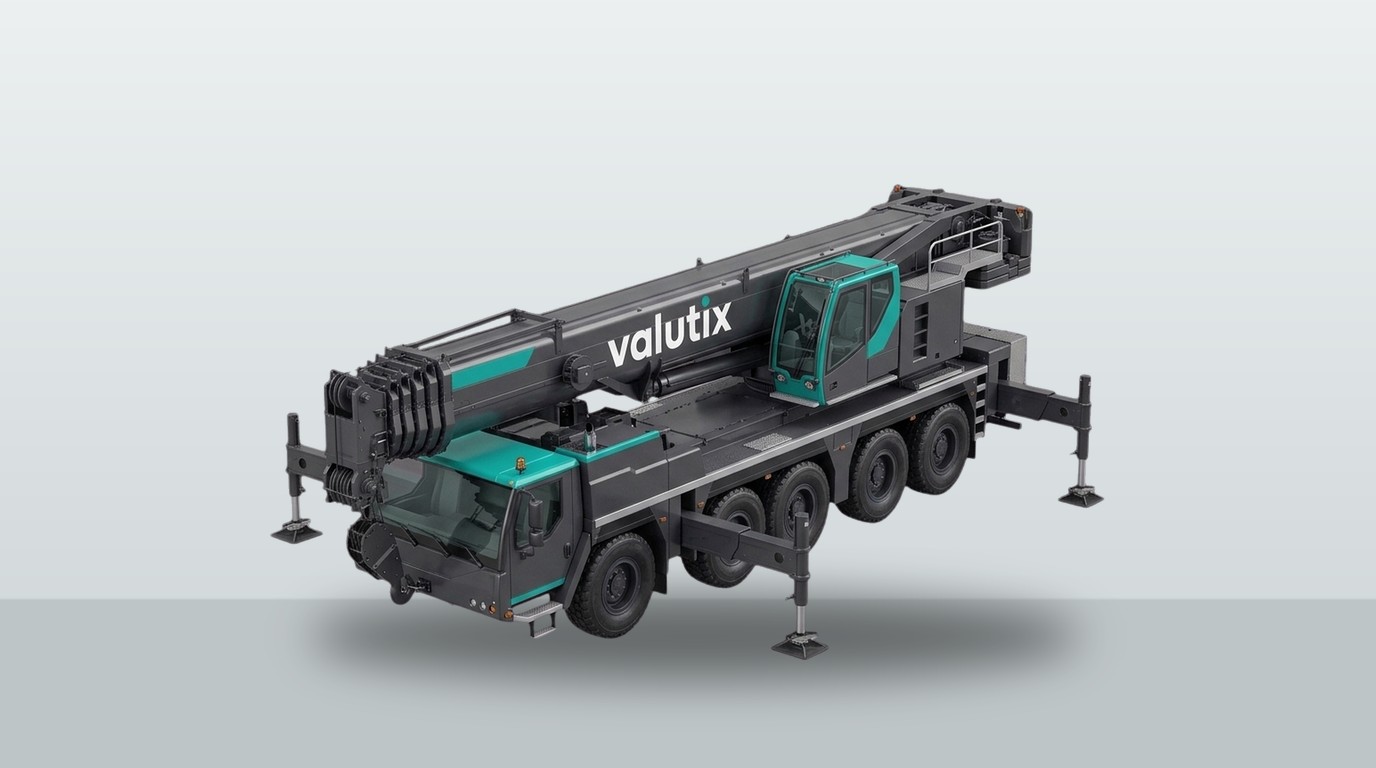
| Code | Dimension | Published value | Planning note |
|---|---|---|---|
| L | Overall transport length | 15,248 mm | Carrier chassis with boom retracted in travel cradle; overall transport length. |
| W | Overall transport width across 16.00 R 25 tyres | 3,000 mm | Carrier width across 16.00 R 25 tyres (standard 3.00 m envelope; travels under NHVR SPV notice). |
| H | Overall transport height (boom in travel cradle) | 3,990 mm | Height to top of boom in travel rest; measured at standard ride height (+158 mm / -118 mm suspension range). |
| WB | Wheelbase (Axle 1 to Axle 5) | 8,490 mm | Total wheelbase from Axle 1 to Axle 5 (axle spacings 2,700 + 1,650 + 2,440 + 1,700 mm, US-spec sheet). |
| OH_F | Front overhang (carrier front bumper) | 2,440 mm | Front bumper overhang ahead of Axle 1 centerline. |
| OH_R | Rear overhang (carrier rear bumper) | 1,790 mm | Rear chassis overhang behind Axle 5 centerline. |
| GC | Ground clearance under axle housings | 400 mm | Minimum ground clearance under axle differentials and suspension links. |
| OB_L | Outrigger base longitudinal length | 8,980 mm | Longitudinal center-to-center span between front and rear outrigger jacks. |
| OB_W | Outrigger base lateral width (fully extended) | 8,300 mm | Full 100% lateral outrigger beam extension (mid-span 5.60 m; retracted 4.60 m). |
| R_tail | Tailswing slewing radius (with 51 t ballast) | 4,855 mm | Superstructure clearance radius with full 51 t counterweight stack fitted (4.35 m with 37 t). |
| R_turn | Turning circle radius (carrier outer corner) | 10,900 mm | Outer turning radius with all-wheel steer active (12.3 m over boom head). |
Working range & kinematics
Rated lifting capacities, hook heights, and operating reach envelopes for the Tadano Faun ATF 160G-5 all-terrain mobile crane. Capacities are strictly governed by working radius, boom length, and counterweight ballast under AS 1418.5 / AS 2550.5.
| Code | Kinematic range item | Published value |
|---|---|---|
| 1 | Max lifting capacity (over rear, 3.0 m radius) | 160,000 kg (metric-market rating; the US-spec Bigge sheet cited shows 181.4 t at 2.7 m, so confirm the market specification. Rated on 13.2 m base boom over rear with heavy-duty equipment, 51 t ballast, 19-part line) |
| 2 | Max lifting capacity (360° slew, 3.0 m radius) | 140,700 kg (Rated at 3.0 m radius through full 360° slew on 13.2 m base boom with 51 t ballast) |
| 3 | Capacity at 5.0 m radius (360°, 13.2 m boom) | 101,100 kg (Heavy lift capacity at 5.0 m radius on base boom with 51 t ballast) |
| 4 | Capacity at 10.0 m radius (360°, 26.3 m boom) | 56,200 kg (Standard civil lifting rating at 10.0 m radius on 26.3 m boom with 51 t ballast) |
| 5 | Capacity at 15.0 m radius (360°, 35.0 m boom) | 23,600 kg (Intermediate reach rating at 15.0 m radius on 35.0 m boom with 51 t ballast) |
| 6 | Capacity at 20.0 m radius (360°, 39.3 m boom) | 11,400 kg (Extended reach rating at 20.0 m radius on 39.3 m boom with 51 t ballast) |
| 7 | Capacity at 30.0 m radius (360°, 60.0 m boom) | 7,000 kg (Long-reach capacity on 60.0 m boom at 30.0 m radius with 51 t ballast) |
| 8 | Capacity at 40.0 m radius (360°, 60.0 m boom) | 4,600 kg (High-reach placement capacity at 40.0 m radius on 60.0 m boom with 51 t ballast) |
| 9 | Capacity at maximum main boom radius (52.0 m radius) | 2,600 kg (Maximum working radius capacity on 60.0 m main boom at 52.0 m radius with 51 t ballast) |
| 10 | Maximum hook height (main boom) | 60.0 m (Hook height at 84° elevation with 60.0 m main boom; tip height approx. 60.5 m) |
| 11 | Maximum hook height with boom extensions | 95.0 m (With 60.0 m main boom plus 37.2 m lattice boom extension / swing-away jib; tip height 97.2 m) |
| 12 | Main boom telescoping length range | 13.2 to 60.0 m (6-section full-power boom: 1 base section and 5 telescoping extensions) |
| 13 | Boom elevation / derricking range | -1.5° to +84° (Luffing time from -1.5° to +84° is approx. 50 s via double-acting hydraulic cylinder) |
| 14 | Main winch maximum single line pull | 9,500 kg (95 kN single line pull on bottom layer; line speed up to 130 m/min) |
Direct cost and market hire prices
Never invent hire rates. In strict accordance with Vaultix estimating governance, all hire rate figures for this 130 to 160 t all-terrain crane class are recorded as not-yet-quoted placeholders. Enter verified project supplier quotes in the calculator below.
Metro and Remote direct costs
| Basis / AUD ex GST | Metro | Remote |
|---|---|---|
| Direct dry / hr | Not yet quoted (placeholder) | Not yet quoted (placeholder) |
| Direct wet / hr | Not yet quoted (placeholder) | Not yet quoted (placeholder) |
| Crane operator & dogman / paid site hr | Not yet quoted (placeholder) | Not yet quoted (placeholder) |
| Delivered diesel / L | 1.94 (reference proxy) | 2.23 (reference proxy) |
| Maintenance, parts and freight | Base allowance | Base plus 25% |
| Roster and camp | Metro working-week roster | 14/7 FIFO, 12-hour days, camp and flights |
Standing decision: Rates for this class have not yet been quoted or audited for vaultix.com.au. To ensure estimating integrity, rates are never estimated from other classes without supplier evidence. Estimators can input their project quotes directly in the instrument below.
Mobilisation, separate one-off cost
| Purchased transport / AUD ex GST | Metro | Remote |
|---|---|---|
| One delivery event | To be quoted by haulier | To be quoted by haulier |
Mobilisation depends on transit distance, route permits, and transport method (self-propelled highway transit at 12 t per axle plus 2x counterweight transport semi-trailers under NHVR Class 1 SPV notices). Allow separate return demobilisation event.
| Source / date | Hire basis | Per hour | Per day | Per week | Conditions |
|---|---|---|---|---|---|
| Awaiting supplier tender verification Status: Unquoted placeholder |
Dry / Wet pending quotes | Not yet quoted | Not yet quoted | Not yet quoted | All hire rate values are unquoted placeholders. Obtain 3 dated project rate cards including counterweight fitment (up to 51 t), swing-away lattice extension, rigging gear, fuel inclusion, and mobilization semi-trailers. |
First-principles direct hourly cost
| Component | Direct dry AUD/hr | Direct wet AUD/hr |
|---|---|---|
| Ownership: depreciation and interest | Not yet quoted | Not yet quoted |
| Insurance and registration | Not yet quoted | Not yet quoted |
| Maintenance, servicing, tyres and wear parts | Not yet quoted | Not yet quoted |
| Fuel and operating lubricants (16.0 L/hr crane proxy) | 0.00 | Not yet quoted |
| Crane operator and dogman crew labour per paid site hour | 0.00 | Not yet quoted |
| Direct cost per operating hour | Not yet quoted | Not yet quoted |
Placeholder. Replace with a current supplier quote; no hire rates are invented or assumed.
Productivity and calculator
Picks per Hour = 3,600 / (T_hook + T_slew/luff + T_set/release) × Efficiency. Hourly Output Rate (t/hr) = Picks per Hour × Typical Unit Load (t). Shift output accounts for setup/rig time per pad move (typically 45–90 min for matting, outrigger deployment, and hydraulic counterweight self-assembly). Lifting capacity depends on operating radius and counterweight ballast (derating smoothly from 140.7 t at 3.0 m to 28.0 t at 18.0 m, 7.0 t at 30.0 m, and 2.6 t at 52.0 m on 51 t ballast; not a lifting chart). All factors are Vaultix civil estimating assumptions.
Activity estimating guides
Vaultix crane estimating standards, 10 November 2026. Joint planning scenarios, not statistical confidence limits.
Cycle times based on 3-part cycle: hook/rigging (60-480 s), slew/luff/hoist (60-300 s), and set/release/de-rig (90-720 s). Operating efficiency (0.45 to 0.85) accounts for dogman communications, tag line control, exclusion zones, and pre-lift hold points. Capacity is strictly governed by radius and counterweight.
01Bridge girder lifts
Rigging, hoisting, slewing, and precision landing of heavy precast concrete Super-T or steel box bridge girders onto bridge abutments and pier headstocks.
Vaultix assumptions: Hook time 300 s; slew & luff time 180 s; set & release time 420 s; total cycle time 900 s; efficiency 65%; typical unit load 28.0 t at 18.0 m operating radius.
Worked example: 3,600 / 900 s x 0.65 efficiency = 2.6 picks/hr; 2.6 picks/hr x 28.0 t = 72.8 t/hr output.
Allow for: Engineered modular spreader beams, heavy synthetic grommets, dual tag lines, two certified riggers, test lift hold points, precision surveyor bearing alignment, and continuous wind speed monitoring.
Pitfalls: Strict road or rail possession window limits; boom deflection increases radius by up to 0.8 m under 28 t load; wind gusts exceeding 9 m/s necessitate immediate lift hold.
02Precast and steel erection
Erecting precast concrete wall panels, heavy columns, and structural steel roof trusses or portal frame members at medium to long radius.
Vaultix assumptions: Hook time 150 s; slew & luff time 120 s; set & release time 240 s; total cycle time 510 s; efficiency 72%; typical unit load 8.5 t at 24.0 m operating radius.
Worked example: 3,600 / 510 s x 0.72 efficiency = 5.1 picks/hr; 5.1 picks/hr x 8.5 t = 43.4 t/hr output.
Allow for: Certified clutch rigging or 4-leg chains, tag line handlers, temporary push-pull prop fixing, MEWP access for bolt torqueing, and radio dogman communication.
Pitfalls: High wind exposure on wide facade panels induces severe side loading; ensure counterweight tailswing (4.86 m) is fully barricaded from MEWPs and transport trucks.
03Plant installation
Hoisting and positioning major industrial mechanical equipment (chillers, transformers, modular process skids, pump skids) onto rooftop or indoor plantroom plinths.
Vaultix assumptions: Hook time 240 s; slew & luff time 150 s; set & release time 420 s; total cycle time 810 s; efficiency 58%; typical unit load 6.0 t at 28.0 m operating radius.
Worked example: 3,600 / 810 s x 0.58 efficiency = 2.6 picks/hr; 2.6 picks/hr x 6.0 t = 15.6 t/hr output.
Allow for: Modular spreader bars, certified soft round slings, dual dogmen for blind roof landing, vibration spring isolator alignment, and holding-down stud clearance.
Pitfalls: Blind lift over parapet requires clear two-way radio channels and video monitoring; hook drift during unweighted release must not snag building parapet edges.
04Heavy equipment loading
Yard loading and unloading of heavy construction equipment components: excavator counterweights, booms, track frames, crusher jaws, or drill rig bodies onto transport floats.
Vaultix assumptions: Hook time 150 s; slew & luff time 90 s; set & release time 180 s; total cycle time 420 s; efficiency 78%; typical unit load 18.0 t at 14.0 m operating radius.
Worked example: 3,600 / 420 s x 0.78 efficiency = 6.7 picks/hr; 6.7 picks/hr x 18.0 t = 120.6 t/hr output.
Allow for: Heavy-duty Grade 100 chain slings, master links, load balance adjustment across trailer axles, dunnage timber placement, and chain lashing handover.
Pitfalls: Off-center center of gravity on asymmetric machine components; verify transport deck load limits and chain angle capacities before lifting.
05Crane assist for temporary works
Handling civil temporary works elements: trench shoring boxes, sheet pile panels, heavy steel road plates, timber crane mats, and dewatering pumps across active excavations.
Vaultix assumptions: Hook time 100 s; slew & luff time 100 s; set & release time 150 s; total cycle time 350 s; efficiency 75%; typical unit load 5.0 t at 20.0 m operating radius.
Worked example: 3,600 / 350 s x 0.75 efficiency = 7.7 picks/hr; 7.7 picks/hr x 5.0 t = 38.5 t/hr output.
Allow for: 2-leg / 4-leg chains with shortening clutches, plate lifting clamps, tag lines, excavator coordination, and repeated short repositioning picks.
Pitfalls: Suction resistance when pulling shoring or trench boxes from wet cohesive clay; never exceed dynamic shock load allowances when freeing embedded temporary works.
06Piling cage lifts
Lifting fabricated cylindrical foundation rebar cages from assembly trestles, pitching from horizontal to vertical, and lowering into bored pile foundations or diaphragm wall guide walls.
Vaultix assumptions: Hook time 180 s; slew & luff time 150 s; set & release time 300 s; total cycle time 630 s; efficiency 68%; typical unit load 9.0 t at 16.0 m operating radius.
Worked example: 3,600 / 630 s x 0.68 efficiency = 3.9 picks/hr; 3.9 picks/hr x 9.0 t = 35.1 t/hr output.
Allow for: Certified lifting beam with multi-point bridle rigging to prevent cage buckling, top dogman guidance over bore, rebar coupler splice hold points, and cage hanger support.
Pitfalls: Long rebar cages are highly flexible; single-point slinging will permanently deform or crush reinforcement cage ties. Ensure engineered multi-point spreader beam is used.
07Wind turbine and substation lifts
Hoisting transformer components, electrical switchgear skids, or wind turbine auxiliary components within substation compounds or laydown hardstands.
Vaultix assumptions: Hook time 180 s; slew & luff time 120 s; set & release time 300 s; total cycle time 600 s; efficiency 60%; typical unit load 15.0 t at 22.0 m operating radius; 51 t counterweight; setup/rig time 75 min.
Worked example: 3,600 / 600 s x 0.60 efficiency = 3.6 picks/hr; 3.6 picks/hr x 15.0 t = 54.0 t/hr output.
Allow for: Engineered lifting lugs, certified synthetic grommets, dedicated electrical safety observer, wind anemometer threshold monitoring, and dual tag lines.
Pitfalls: Strict statutory electrical approach distances from energized overhead busbars (minimum 3.0 m to 8.0 m); high sail area on electrical housings induces wind drift.
Estimator checks
- SafeWork High Risk Work Licences: Operator must hold HRWL class C0 (Open capacity slewing mobile crane); minimum 2 qualified dogmen/riggers holding class DG or RI/RA required for slinging and guidance. Critical lifts (>20 t, tandem lifts, or rail corridors) require an appointed Lift Supervisor under AS 2550.1.
- Counterweight transport logistics: Crane mobilises at 12 t per axle (60 t GVM) carrying 1 t base counterweight. The remaining 50 t of divisible ballast requires 2 support semi-trailers (~25 t payload each). Factor trailer hire, transport permits, and pilot escorts into the overall mobilization budget.
- Hydraulic counterweight self-assembly: Divisible ballast up to 51 t is self-assembled hydraulically by onboard superstructure cylinders in approx. 45 to 60 minutes without requiring an auxiliary assist crane.
- Geotechnical outrigger bearing verification: Peak vertical outrigger pad reactions reach up to 850 kN (~87 t) per pad on worst-case slewing quadrants. Verify ground bearing capacity with project geotechnical reports and specify engineered hardwood cribbing or HDPE spreader mats to distribute pressure below allowable limits (typically 150-250 kPa).
- Dynamic load chart deration by radius: Unlike earthmoving plant where capacity is bucket-fixed, crane capacity drops sharply with radius (140.7 t at 3 m, 56.2 t at 10 m, 23.6 t at 15 m, 11.4 t at 20 m, 7.0 t at 30 m, and 2.6 t at 52 m on 51 t ballast). Estimators must check that load plus rigging plus hook block does not exceed 75% to 80% of rated capacity at the required radius.
- Boom deflection growth: Long-reach picks induce structural boom deflection that extends working radius by 0.5 to 1.2 m at hook lift-off, reducing chart margin. Dogmen and operators must account for boom drift during initial tensioning.
- Dual-engine fuel accounting: Crane lifting operations draw diesel solely from the 250 L superstructure tank (Mercedes-Benz OM 906 LA 137 kW, allowance 16.0 L/hr civil likely). Highway travel draws from the separate 530 L carrier tank (Mercedes-Benz OM 502 LA 385 kW V8, allowance 65-85 L/100 km).
- All hire rate schedules are unquoted placeholders. In accordance with Vaultix estimating principles, never invent hire rates without formal supplier tenders.
- Output is pick-governed (picks/hr) and load-governed (t/hr), not bucket payload. Balance crane placement rate with delivery transport and installation crew pacing.
- SafeWork HRWL Class C0 required for crane operator; Class DG or RI/RA required for dogman/rigger.
Data basis. Independent check 10 November 2026 against the Tadano ATF 160G-5 sheet (a US-market Bigge sheet): 7 of 12 values matched. Corrected: tailswing 4.855 m (5.082 m with auxiliary winch), wheelbase 8,490 mm, carrier engine 385 kW (517 hp), superstructure engine 137 kW, winch line pull 95 kN, slew 0 to 1.5 rpm. The maximum capacity differs by market: 160 t at 3.0 m on the metric sheet, 181.4 t at 2.7 m on the US sheet cited. Confirm the specification of the actual hire crane and use its own load chart. Axle loads are not stated on the sheet. The earlier page references (p.30, 31) were wrong; engines and tanks are on pages 2 and 4. Reference model: Tadano Faun ATF 160G-5 5-Axle All-Terrain Mobile Crane (160 t class). Technical specifications sourced from TADANO FAUN GmbH ATF 160G-5 Datasheet (https://images.bigge.com/crane-charts/Tadano_ATF-160G-5.pdf). Sourced 10 November 2026. Fuel burn derived from Mercedes-Benz OM 906 LA superstructure telematics duty load factor benchmark (16.0 L/hr civil lifting likely; carrier V8 travel fuel 65-85 L/100 km). Productivity uses Vaultix heavy civil crane cycle formulas. Hire rates remain unquoted placeholders pending verified tenders. Sources and assumptions documented in crane-150t-at.md.
Entry / crane-150t-at Issue / 2026-11-10
Library navigation
Plant and method index · Discipline work packages · Survey conformance and lot release